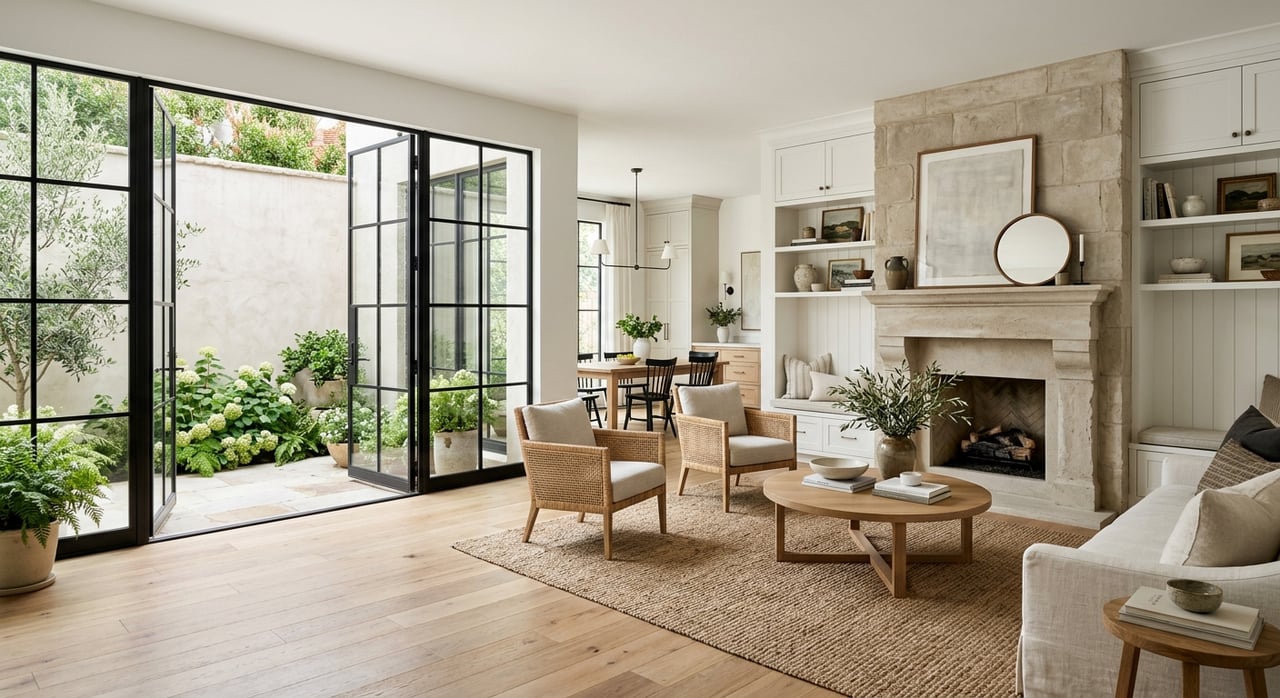
Move-Up Buying In Keller: Lots, Layouts And Local Norms
June 25, 2026
June 25, 2026
If you are planning a move-up purchase in Keller, you are probably not just asking, "How do I get more square footage?" You are more likely weighing a bigger question: how much lot, how much layout, and how much neighborhood structure actually fits your next chapter. Keller gives you real choices on all three, and understanding those tradeoffs can help you buy with more confidence. Let’s dive in.
In Keller, move-up buying often comes down to a three-way decision between house size, lot size, and neighborhood structure. That matters because the city includes everything from master-planned communities with amenities to no-HOA homes on larger lots and older established streets with a different feel.
Price points also reflect that variety. Current market measures place Keller roughly from the mid-$600,000s to the mid-$700,000s depending on the source and method used, with Zillow showing average home value near $655,788, Redfin reporting a March 2026 median sale price of $655,000, and Realtor.com showing a median listing price around $749,000 with a median sale price around $745,000.
For you, that means the move-up conversation is usually more specific than “bigger home, bigger budget.” It is often about deciding whether your budget works best for a larger yard, a more open floor plan, newer finishes, or a community with built-in amenities.
One of Keller’s biggest strengths is range. The city’s zoning framework includes large-lot categories like SF-36 with 36,000-square-foot minimum lots, along with smaller residential categories such as SF-10, SF-8.4, SF-7, and SF-6. The zoning legend also includes patio-home and townhome categories.
The city’s land-use descriptions show how those categories translate in practice. SF-36 is described as large-lot with a country atmosphere, while SF-25 and SF-20 fit more traditional suburban neighborhoods. SF-15 and SF-12 represent smaller-lot suburban neighborhoods that still include sidewalks and centralized open space.
Keller’s future land-use analysis gives an even clearer picture of what you will likely see on the ground. The most common lot-size bucket is 8,400 to 11,999 square feet at 29.4% of lots, followed by 3,000 to 8,399 square feet at 22.1%, 12,000 to 14,999 square feet at 12.1%, and 15,000 to 19,999 square feet at 9.1%.
That mix helps explain why many Keller neighborhoods feel suburban rather than estate-like, even when lots may still be larger than newer production neighborhoods in other parts of DFW. If you are moving up from a tighter lot elsewhere, Keller may already feel like an upgrade before you even reach the one-acre category.
A bigger lot can sound great until you think about what comes with it. More yard may mean more privacy, more room for outdoor living, and more flexibility, but it can also mean more maintenance and higher expectations for upkeep.
That is why this question matters early in your search. If you want space for a pool, garden, workshop area, or simply more breathing room between homes, a larger lot may be worth prioritizing. If you would rather spend your weekends enjoying the house than maintaining the yard, a mid-size lot in a more structured neighborhood may be the better move.
Keller gives you both paths. Current no-HOA inventory includes homes on 0.78-acre, 0.84-acre, and 1-plus-acre lots, while newer and more master-planned options may offer a more compact footprint with neighborhood amenities.
For most move-up buyers, the key question is not whether a home meets a minimum square footage threshold. It is whether the floor plan actually lives like a move-up home.
That distinction matters in Keller because city code minimums are much lower than what many move-up buyers want. Minimum home sizes range from 1,400 square feet in SF-8.4 districts to 2,400 square feet in the largest-lot districts, but current move-up inventory often goes well beyond that.
Current Hidden Lakes listings show what many buyers are really looking for. Examples include 4-bedroom homes around 3,096 to 3,904 square feet with features such as dedicated offices, gourmet kitchens, open layouts, backyard retreats, and primary suites on the main level. Another listing there highlights one-level living with 4 bedrooms and 3 baths.
If you are defining your move-up priorities, these are the kinds of layout questions worth asking:
In many cases, the right answer is about flow, not just square footage. A well-designed 3,200-square-foot home can feel more functional than a larger home with rooms you rarely use.
If you like planned amenities and a more standardized neighborhood setup, Keller has strong HOA-backed options. Hidden Lakes is one of the best-known examples and includes homes built from 1996 to 2020 by multiple national and custom builders.
According to the community, Hidden Lakes includes a clubhouse, pools, trails, greenbelts, and a public golf course. It is administered by a volunteer board with professional management support, which gives buyers a good example of what a structured community can look like in Keller.
For move-up buyers, HOA neighborhoods often appeal because they can bundle several wants into one place. You may get neighborhood amenities, more consistent streetscapes, and layouts that match what many buyers expect in an upper-moderate move-up home.
That said, structure has a tradeoff. If autonomy matters more to you than amenities, an HOA neighborhood may not be your best fit.
Keller also has meaningful no-HOA inventory, and that can be a major draw. Buyers often look at these properties when they want more freedom, larger lots, mature landscaping, or a less standardized neighborhood pattern.
That flexibility can be especially appealing if you value space over amenities. In practical terms, no-HOA homes may offer more lot options, more variation in architecture and age, and a different pace than a master-planned community.
The price range in this segment also shows how broad Keller can be. Current no-HOA examples include a 1,904-square-foot home at $349,900, a 2,638-square-foot home on nearly half an acre at $720,000, and a 4,390-square-foot home built in 2020 on a 0.84-acre lot at $1.995 million.
That spread is a reminder that “no HOA” is not a price point by itself. In Keller, lot size, age, and finish level can move a home from entry move-up territory into luxury pricing very quickly.
Hidden Lakes and Marshall Ridge help illustrate how Keller’s move-up market works. Realtor.com places Hidden Lakes around a $737,000 median listing price, while Marshall Ridge is around $769,950.
Marshall Ridge also shows how lot size can shape value within the same neighborhood. Current listings include a 3,286-square-foot home on a 6,621-square-foot lot at $575,000, a 3,798-square-foot home on a 7,710-square-foot lot at $750,000, a 4,640-square-foot home on a 0.24-acre lot at $809,000, and a 3,453-square-foot home on 0.32 acre at $770,000.
That is helpful because it shows why subdivision name alone is not enough. Two homes in the same neighborhood can have very different value stories based on lot size, floor plan, updates, and overall finish.
Some buyers assume a newer home in Keller will automatically come with a generous lot. That is not always the case.
Recent zoning actions show how varied newer supply can be. The Preserve at Keller Oaks was described in 2026 as a proposed 59-lot development on 39.38 acres with 15,000-square-foot lots, while Beverly Grove was discussed as a planned development with 8,400-square-foot minimum lots.
That is a meaningful difference. If newer construction is high on your list, it is smart to compare not just the house itself, but also the lot size and the overall neighborhood pattern.
One of the most important local habits in Keller is verifying what applies to a specific property instead of assuming the whole city works the same way. Zoning is parcel-specific, and that can affect lot expectations, setbacks, and how a street feels.
Old Town Keller is a great example. The ordinance describes its character with build-to lines and reduced setbacks from the street, which is different from a conventional suburban pattern.
That is why city zoning maps and GIS tools matter during a move-up search. If you want to know whether a lot sits in a larger-lot subdivision, an older overlay district, or a more compact residential category, those local tools can give you a clearer answer than broad neighborhood assumptions.
If Keller is on your shortlist, a simple framework can help you focus quickly. Start by ranking your top priorities in order instead of trying to maximize everything at once.
Ask yourself:
Once you know those answers, Keller gets easier to read. Instead of chasing every new listing, you can compare homes based on the tradeoffs that actually matter to you.
A move-up purchase should feel like a meaningful step forward, not just a larger payment. With the right local guidance, you can sort through Keller’s lot sizes, layouts, and neighborhood norms to find the version of “more” that fits your life best. When you are ready to talk through your options in Keller, connect with David DeVries for responsive, neighborhood-level guidance tailored to your next move.
Stay up to date on the latest real estate trends.
Get assistance in determining current property value, crafting a competitive offer, writing and negotiating a contract, and much more. Contact me today.