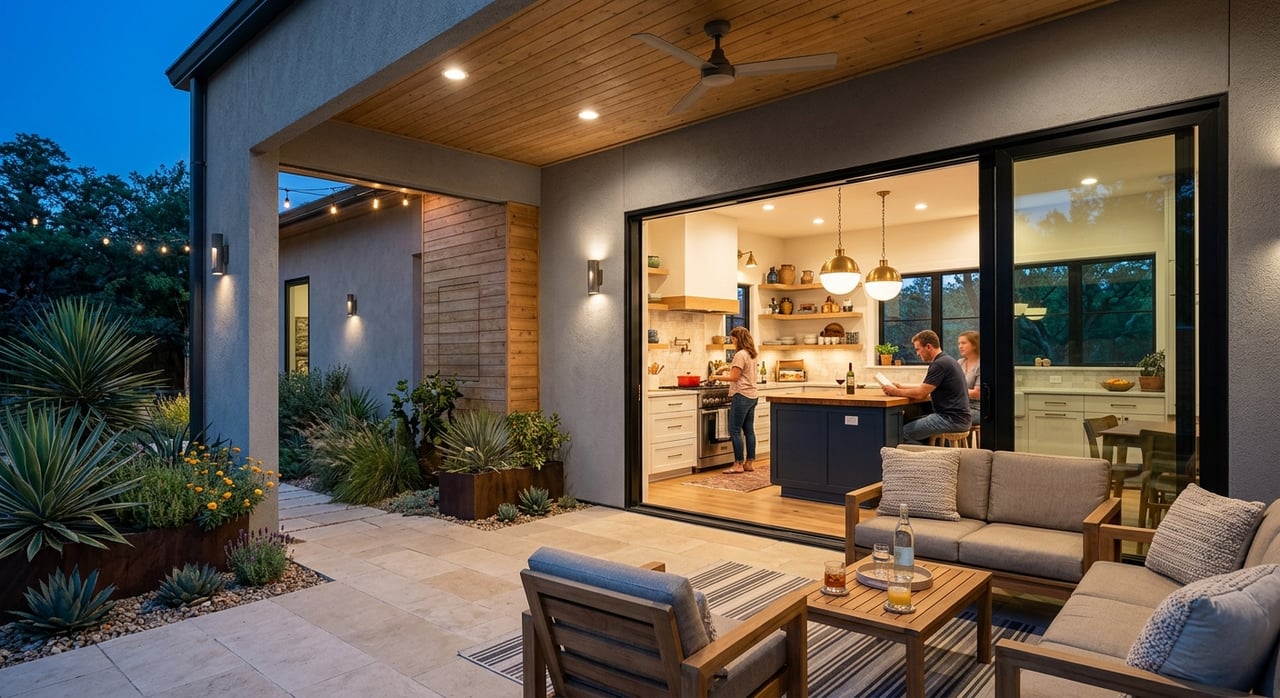
Remote-Buying A Home In Las Colinas From Out Of State
April 23, 2026
April 23, 2026
Relocating to Las Colinas from another state can feel exciting and a little risky at the same time. You want to move quickly when the right home appears, but you also need a process that protects you when you cannot be there in person for every step. The good news is that with the right planning, a remote purchase can be organized, efficient, and much less stressful. In this guide, you will learn how to buy a home in Las Colinas from out of state, what local documents and fees deserve extra attention, and how to keep your due diligence on track. Let’s dive in.
Las Colinas stands out because it is more than a typical residential area. It is a large mixed-use planned community in Irving with office towers, retail, residential options, and recreation, and it also offers strong access to the rest of the metroplex. According to the North Central Texas Council of Governments overview of the Irving-Las Colinas Urban Center, the area benefits from Orange Line service, the APT system, and connections that support airport access.
That location matters if you are relocating for work, splitting time between cities, or simply want easier access to DFW. The Las Colinas Association also highlights that the community is minutes from DFW International Airport and Love Field Airport, which can make travel logistics easier when you are moving from out of state.
Before you schedule tours, it helps to create a clear communication plan with your agent, lender, and title contacts. In Texas, brokers and sales agents must respond within two calendar days to their principal, another broker or sales agent, or an unrepresented party, even on weekends and holidays, according to TREC’s response-time rule guidance. That response can be a simple acknowledgment, but it still gives you a framework for setting expectations.
For you as a remote buyer, that means fewer surprises if everyone agrees early on how updates will be shared. Ask for a cadence for new listings, tour feedback, contract deadlines, and inspection results so you can make decisions quickly from out of state.
Photos can help you narrow the list, but live video tours usually give you a much better sense of layout, condition, light, and surroundings. A real-time walkthrough also lets you ask questions on the spot about storage, finishes, traffic noise, views, parking, and building access.
Still, a walkthrough is not the same as an inspection. TREC explains that walkthrough inspections are not a substitute for a standard residential inspection, and licensed inspectors for one-to-four-family homes must follow the state’s Standards of Practice and provide the required inspection report form. In other words, video tours help you choose a home, but they should never replace licensed due diligence.
When you are touring remotely, ask your agent to show more than the obvious highlights.
If you are buying from out of state, your contract timeline matters even more because you are coordinating inspections, repair conversations, and closing logistics from afar. One key term is the option period. TREC’s FAQ guidance explains that if you pay the negotiated option fee, you have the unrestricted right to terminate for any reason by giving written notice during that period.
Buyers commonly use the option period to inspect the property and negotiate repairs. TREC also notes that contract days are counted starting the day after the effective date. That is important because a short timeline can move fast if you are lining up vendors and reviewing documents from another state.
A well-planned option period gives you time to:
You do not need to be physically present for the inspection process to move forward. TREC states that a separate pre-inspection or employment contract is not required for the inspection itself, which can help keep scheduling simple for an out-of-state buyer.
In practical terms, you can have a licensed inspector access the home, complete the inspection, and deliver the report digitally. You can then review the findings with your agent and decide whether to ask for repairs, request credits if available through negotiation, or terminate during the option period.
That depends on the access arrangements, but remote buyers often rely on their agent to help coordinate entry and timing with the listing side. The important part is not who physically opens the door. It is making sure the inspection happens quickly enough for you to review the report and respond before deadlines expire.
Repair negotiations can move quickly, especially if the option period is short. TREC’s guidance on timely responses makes clear that prompt acknowledgment is required, even though no one is forced to accept or reject a proposal on the spot.
For a remote transaction, documentation is your friend. Keep repair requests, counterproposals, deadlines, and updates organized through your agent and title contacts so there is a clear written record of what was requested and when.
Las Colinas has a detail that many out-of-state buyers do not expect right away. In many cases, you are not just looking at a single neighborhood HOA. You may also be dealing with a broader master-association structure.
According to the Las Colinas Association property compliance page, owners are bound by the community’s covenants, conditions, and deed restrictions in the Las Colinas Declaration, along with supplementary declarations for specific areas. That means your due diligence should include more than the home itself.
The Las Colinas Association administrative services page says residential resale certificate packages can include:
The same source says the annual assessment is based on the prior year’s Dallas County appraised value, is due July 1, and currently runs at $0.115 per $100 of appraised value. It also notes that owners in residential villages may pay an additional assessment to an independent homeowners or condominium association.
If you are budgeting from out of state, you want the full cost picture early. Mortgage, taxes, and insurance are only part of the equation. In Las Colinas, association assessments and layered governing documents can affect both your monthly budget and your long-term plans for the property.
If you may remodel after closing or rent the property later, do not wait until after the purchase to investigate restrictions. The Las Colinas Association governance page links to architectural-control guidelines and a Short Term Rental Resolution, and the property compliance resources explain that structures and landscaping are reviewed for compliance with community standards.
That does not mean every property will have the same rules, but it does mean you should review the relevant documents for the specific property before your offer becomes final. This is especially important if your move plan includes updates, exterior changes, or future rental use.
If school assignment is part of your home search, verify it by the property address rather than by a neighborhood label. Irving ISD’s school assignment tools direct families to use the district map and locator for the exact address.
That extra step matters for remote buyers because online listings and casual descriptions may not reflect the most current assignment information. An address-based check is the more reliable way to confirm what applies to the home you are considering.
Las Colinas includes water features, canals, and areas where flood-risk questions may come up depending on the location of the property. FEMA’s Flood Map Service Center is the official public source for flood hazard information and current flood maps, and FEMA notes that maps can change over time.
You should also verify tax-related details directly. The Dallas Central Appraisal District appraises property for ad valorem tax assessment on behalf of local governing bodies in Dallas County. Instead of relying only on a listing estimate, review the parcel record and taxing units for the specific property you plan to buy.
One of the biggest risks in any remote purchase is filling in the blanks with assumptions. Las Colinas can be very convenient, but convenience looks different depending on your building, commute, parking setup, and transit needs.
Because the area is business-heavy, it is smart to test your day-to-day routine before you close. Review commute routes, airport access, transit options, parking arrangements, and how close the property is to the places you expect to visit often. The NCTCOG overview and the Las Colinas Association can help you understand the broader transportation context, including Orange Line and APT connections.
In many cases, yes, if your lender and title company allow it. The Texas Secretary of State’s online notarization guidance explains that Texas permits online notarization through a Texas online notary using two-way video and audio, credential analysis, and identity proofing.
That same guidance also explains that electronic notarization is not the same as online notarization, which is an important distinction when you are coordinating from another state. On the recording side, Dallas County supports e-recording, and the county notes that electronically submitted documents are processed within a 24-hour period. Together, those tools can make a remote closing more realistic when the parties involved support the process.
If you want to keep your purchase organized, focus on this sequence:
Buying from out of state does not have to mean buying blindly. With responsive guidance, a clear process, and careful review of Las Colinas-specific documents, you can move forward with more confidence and fewer surprises. If you are planning a move and want a local team that can help you stay organized from search to closing, connect with David DeVries for personalized relocation support.
Stay up to date on the latest real estate trends.



Get assistance in determining current property value, crafting a competitive offer, writing and negotiating a contract, and much more. Contact me today.